





UV Resistance of Materials When Exposed to Direct Sunlight
UV Resistance of a material
Materials degrade at vastly different rates when exposed to direct sunlight because ultraviolet (UV) radiation breaks down chemical bonds through a process called photo-oxidation. The material's molecular structure determines whether it will withstand sunlight or suffer from embrittlement, fading, cracking, and loss of properties.
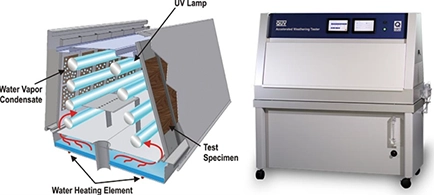
Accelerated UV weathering tests simulate decades of outdoor sunlight, heat, and moisture damage in a fraction of the time using specialized laboratory environmental chambers. These tests help manufacturers predict the lifespan of polymers, coatings, textiles, and metals by forcing rapid photo-oxidation.
Primary Testing Equipment Standards
Industrial testing relies on two main types of chambers, each replicating different aspects of solar radiation:
Details | Fluorescent UV (QUV) Testing | Xenon Arc Testing |
|---|---|---|
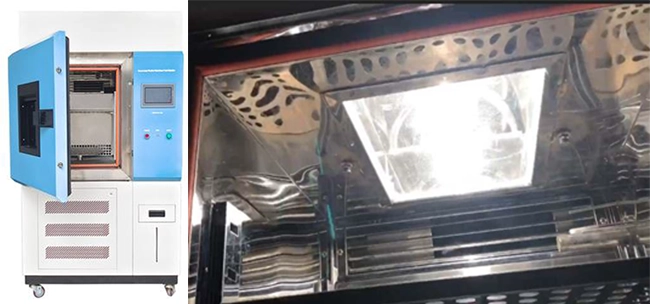
Light Source | Fluorescent UV lamps (UVA or UVB) | Xenon arc lamps |
Spectrum Match | Replicates critical short-wave UV only | Matches the entire sunlight spectrum |
Best Used For | Physical damage (cracking, embrittlement) | Appearance changes (fading, color shift) |
Primary Standard | ASTM G154 / ISO 4892-3 | ASTM G155 / ISO 4892-2 |
Moisture Method | Condensation mechanism | Direct water spray |
Exposure Duration | As per end user requirements | As per end user requirements |
Key Environmental Variables Controlled
Chambers compress years of outdoor exposure into weeks by continuously cycling through aggressive environmental settings:
Irradiance: Controls the intensity of the light wavelengths hitting the test panels.
Temperature: Keeps the chamber hot (typically 50°C to 80°C) to speed up chemical degradation.
Moisture: Alternates cycles with water sprays or high condensation to mimic dew and rain.
Dark Cycles: Simulates nighttime periods where absorbed moisture can soak into the material.
Post-Test Evaluation Metrics
After exposure, engineers measure material degradation by comparing samples against unexposed control pieces:
Colorimetry: Uses spectrophotometers to calculate total color change (Δ E).
Gloss Retention: Measures surface degradation by checking how much light reflects off the material.
Tensile Testing: Evaluates loss of physical strength if required.
Visual Inspection: Checks for surface defects like chalking, blistering, cracking, or crazing.
Limitations
While accelerated weathering chambers provide vital data, they cannot perfectly replicate the complex, unpredictable nature of real-world outdoor exposure. Relying solely on these tests introduces several critical limitations that engineers and manufacturers must account for.
The Problem with Correlation
No Fixed Conversion Factor: You cannot say "100 hours in a chamber equals exactly 1 year outside."
Geographic Variances: Real sunlight intensity, humidity, and temperature vary widely between places like Arizona and United Arab Emirates.
Microclimates: Accelerated tests cannot predict localized conditions like urban smog, shade, or salt spray.
Equipment & Spectrum Limitations
Unnatural Spectrum (QUV): Fluorescent UVA/UVB lamps omit visible light and infrared heat, missing damage caused by full solar exposure.
Thermal Overstress: Running chambers at sustained high temperatures (e.g., 70°C) can trigger unnatural chemical breakdowns that would never happen at ambient outdoor temperatures.
Static Stresses: Chambers apply uniform, static light and moisture, completely ignoring real-world dynamic physical stresses like wind-driven vibrations, bending, and hail impact.
Moisture & Pollution Discrepancies
Distilled Water Only: Testing uses pure water, ignoring the corrosive effects of acid rain, ozone, vehicle exhaust, and industrial pollutants.
Rapid Cycles: Quick alternating cycles do not allow materials to fully dry out or absorb deep moisture the way day-long natural weather cycles do.
Biological Blind Spots: Standard test protocols do not account for the growth of mold, mildew, or algae, which trap moisture and chemically attack materials over time.
Test Apparatus (UV Weathering)
Test Apparatus – Xenon Arc
Radiometer for Equipment Calibration
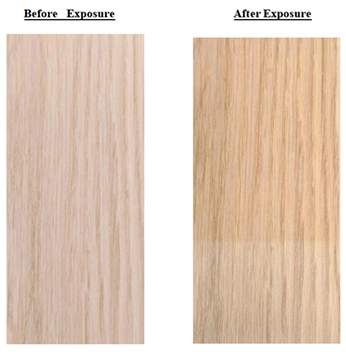
Test Sample Showing Slight Color Change
About Wimpey Laboratories
Wimpey Laboratories is a leading independent provider of ISO-accredited testing and calibration services, backed by over 20 years of expertise. Leveraging advanced technology, it delivers accurate, reliable solutions that ensure safety, compliance, and customer satisfaction. Serving more than 9,500 clients across 49+ countries, Wimpey offers over 5,500 accredited services tailored to diverse industry needs.