






Assess social and ethical risks early to support compliance, improve supply chain transparency, and build responsible sourcing strategies.
The Importance of Social Certifications for Consumer Product
Global consumer product services (CPS) supply chains are expanding rapidly. But growth comes with increased scrutiny. Early-stage supply chain evaluation now covers more than product quality or cost efficiency. Increasingly, brands, regulators, and investors expect clear evidence of ethical sourcing, responsible labour practices, and social compliance from the outset.
Social certification and audit programmes have become essential tools for evaluating supply chains at an early stage. This helps organizations identify risks, establish baseline compliance, and build stronger, more transparent supplier networks.
Why Social Compliance Matters Early in CPS Supply Chains
Addressing social compliance at the earliest stages of supply chain development reduces exposure to operational, regulatory, and reputational risks.
Early-stage social audits and certifications help organizations:
- Identify labour, safety, and ethical risks before scaling production
- Ensure alignment with international social compliance standards
- Establish consistent supplier expectations and accountability
- Reduce the likelihood of disruptions, penalties, or brand damage
- Strengthen trust with retailers, regulators, and consumers
For the CPS sectors where supply chains are often multi-tiered and geographically dispersed, early intervention is critical to maintaining control and transparency.
The Role of Social Certification in Supply Chain Evaluation
Social certification provides a structured framework for assessing and verifying supplier practices against recognized standards. Certifications such as SA8000, SMETA, FSC COC, and amfori BSCI establish measurable benchmarks for ethical labour practices, workplace safety, and responsible operations.
For early-stage supplier onboarding, certification helps:
- Validate supplier credibility and readiness
- Standardize expectations across global sourcing networks
- Facilitate faster qualification and approval processes
- Support compliance with retailer and buyer requirements
By embedding certification at the evaluation stage, organizations create a stronger foundation for long-term compliance and scalability.
How Social Audits Strengthen Early Supplier Assessments
While certification provides the framework, social audits deliver on-the-ground verification of supplier practices.
Independent audits assess:
- Working conditions and occupational health and safety
- Labour rights, including wages, working hours, and contracts
- Child labour, forced labour, and discrimination risks
- Management systems and governance practices
- Facility level compliance with local and international regulations
For early-stage supply chain assessments, audits provide critical insights into supplier capability, risk exposure, and improvement requirements before commercial relationships deepen.
Key Benefits of Early-Stage Social Audits and Certification
Integrating social compliance into early supply chain evaluation delivers measurable advantages:
1. Proactive Risk Mitigation
Identifying risks at onboarding reduces the likelihood of costly corrective actions, production delays, or reputational incidents later.
2. Faster Supplier Qualification
Pre-assessed and certified suppliers can be onboarded more efficiently, accelerating time-to-market.
3. Improved Supplier Performance
Early visibility into gaps enables targeted corrective action plans and continuous improvement.
4. Stronger Brand Protection
Demonstrating responsible sourcing from the outset enhances brand credibility and stakeholder confidence.
5. Enhanced Regulatory Readiness
Early compliance alignment supports emerging due diligence regulations across the EU and global markets.
Aligning with Evolving ESG and Due Diligence Requirements
Social audits and certifications are increasingly aligned with broader ESG frameworks and regulatory developments, including:
- Human rights due diligence regulations
- Supply chain transparency requirements
- Sustainability reporting frameworks
- Retailer and brand sourcing standards
Organizations that implement social compliance assessments early are better positioned to meet evolving regulatory expectations while maintaining operational resilience.
Integrating Social Compliance into CPS Supply Chain Strategy
To maximize impact, social certification and audits should be integrated into a structured early-stage evaluation framework:
- Supplier pre-qualification screening using social compliance criteria
- Risk-based audit planning based on geography, sector, and product type
- Certification alignment with buyer and regulatory requirements
- Corrective action tracking and continuous improvement programmes
- Ongoing monitoring and re-audits as supply chains expand
This approach ensures that social compliance is not reactive but embedded as a core component of supply chain governance.
How Cotecna Supports Early-Stage CPS Supply Chain Evaluation
Cotecna provides independent social audits, certification support, and supply chain evaluation services tailored to early-stage CPS sourcing.
Through a global network of trained auditors and industry expertise, Cotecna helps clients:
- Assess supplier compliance against international social standards
- Identify risks across multi-tier supply chains
- Support certification processes (SMETA, BSCI, FSC COC, SA8000)
- Implement corrective action plans and performance improvement
- Strengthen transparency and traceability from the outset
By combining independent verification, global coverage, and ESG expertise, Cotecna enables organizations to build compliant, resilient, and responsible consumer product supply chains from day one.
SMETA vs BSCI: Choosing the Right Social Audit Framework
SMETA (Sedex Members Ethical Trade Audit) and amfori BSCI are two of the most widely used social audit frameworks for evaluating supplier compliance. While both focus on ethical labour practices, health and safety, and working conditions, they differ in approach and structure.
SMETA is an audit methodology that provides detailed, site-level visibility and is widely accepted by global buyers, while BSCI is a membership based initiative that combines auditing with supplier development and continuous improvement. For early-stage CPS supply chain assessments, the choice depends on buyer requirements, geographic footprint, and the desired level of supplier engagement.
Audit Readiness: Preparing Suppliers for Early Evaluation
Audit readiness is critical for ensuring accurate and efficient early-stage supply chain assessments. Suppliers that are well-prepared, with documented policies, employee records, safety procedures, and management systems, are more likely to demonstrate compliance and avoid delays in onboarding.
Early audit preparation also helps suppliers identify internal gaps before third-party evaluations, reducing the risk of non-conformities. For CPS companies, supporting audit readiness across their supplier base improves consistency, streamlines qualification processes, and enhances overall supply chain transparency.
Corrective Action Plans (CAPs): Driving Continuous Improvement
Corrective Action Plans (CAPs) are a key outcome of social audits, outlining the steps required to address identified non-compliances. In early-stage supply chain evaluation, CAPs play a critical role in determining supplier viability and long-term performance.
Well structured CAPs include clear timelines, responsibilities, and measurable actions to resolve issues related to labour practices, safety, or governance. By implementing and tracking CAPs from the outset, organizations can improve supplier performance, strengthen compliance, and ensure continuous alignment with evolving social and regulatory standards.
Adding Strength to Consumer Product Supply Chains with Cotecna
In an increasingly regulated and transparent global market, social compliance can no longer be addressed after the fact. Early-stage evaluation through certification and audits provides the visibility and control needed to manage risk, protect brand integrity, and ensure sustainable growth.
For CPS companies, integrating social compliance at the beginning of the supply chain journey is a strategic necessity.
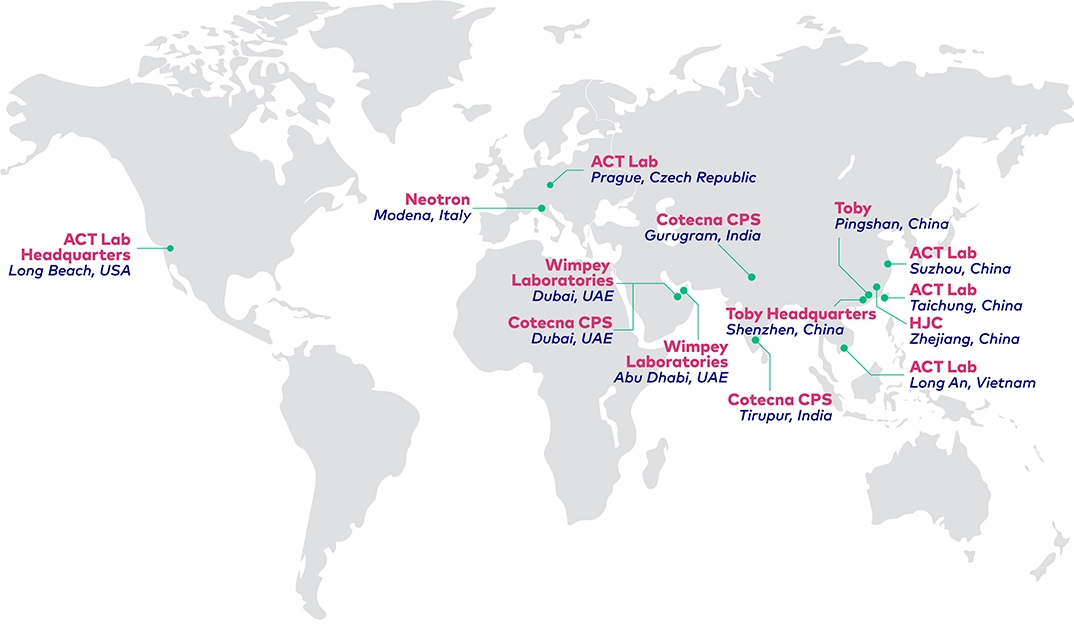
Cotecna Global Network
Our network covers over 180 offices and laboratories globally.
Discover Cotecna CPS Service Providers
Download the free Cotecna Consumer Product Services Brochure.
To learn more about Cotecna Consumer Product Services, or to get a free quote, please contact us. Or, access our full CPS verification services on Amazon.
Follow us on Social Media to keep up with our Adding Strength to Supply Chains series.
About Wimpey Laboratories
Wimpey Laboratories is a leading independent provider of ISO-accredited testing and calibration services, backed by over 20 years of expertise. Leveraging advanced technology, it delivers accurate, reliable solutions that ensure safety, compliance, and customer satisfaction. Serving more than 9,500 clients across 49+ countries, Wimpey offers over 5,500 accredited services tailored to diverse industry needs.